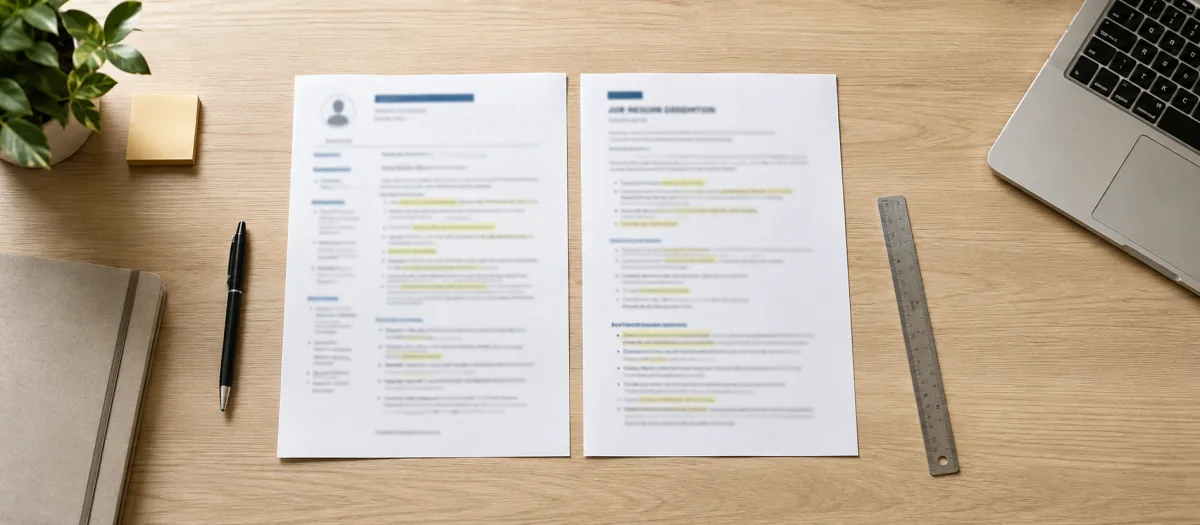

Short answer: roughly 6 to 9 seconds on the first pass. The most widely cited eye-tracking study (The Ladders, 2018) measured an average initial scan of 7.4 seconds, and recruiter surveys tend to land in a similar 6-to-12 second window. The deeper read only happens if you survive that first glance.
TL;DR: Recruiters give a resume a single-digit-second scan before deciding to bin it or read on. To survive that scan, use a clean single-column layout, put your most quantified wins near the top, and work role-specific keywords in naturally. In Australia this matters more than it used to: SEEK reported applications per job ad at a record high through 2025, so you are one of a much bigger crowd.
Where the Numbers Come From
If you have seen "6 seconds", "7.4 seconds", or "6 to 10 seconds" quoted online, they nearly all trace back to a handful of sources:
- The Ladders eye-tracking study (2018): the one everyone cites. Using eye-tracking gear on real recruiters, it measured an average initial screen of 7.4 seconds per resume.
- The Ladders original study (2012): the earlier version measured about 6 seconds, which is where the famous "6-second resume" line comes from.
- Recruiter surveys (various): self-reported first-pass times cluster between 6 and 12 seconds, followed by a longer 30-to-60 second review for anything that clears the first cut.
These are US studies, so treat the exact figure loosely. What every source agrees on is the pattern, and it is the pattern that matters: the first pass is measured in seconds, not minutes, and it decides whether your resume ever gets a real read.
Here is why. Picture yourself as an in-house recruiter at an Australian company with one good role open. SEEK's 2025 data had applications per job ad sitting at the highest level on record, with growth running for more than three years straight, and some individual ads pulling in over 4,000 applicants. Even a middling ad can land 100-plus applications in a few days. If you gave every one a careful five-minute read, a single shortlist would eat your entire week.
So recruiters triage. They scan fast, cut hard, and only slow down for the handful that clearly fit. If your resume is not built for that quick scan, it gets cut before anyone appreciates what you can actually do. This guide breaks down how that scan works and how to structure your resume to survive it.
What the 7-Second Scan Actually Is
The "7-second scan" is not someone reading your resume word for word in seven seconds. It is a triage pass. In that window a recruiter is checking a few baseline signals: does this person do roughly the right kind of work, at roughly the right level, without any obvious red flags? Pass that, and you earn a proper read. Fail it, and you never reach the second stage.
With most Australian applications now flowing through SEEK, LinkedIn, or a company careers page, there is usually a software layer in front of the human as well, which we will come to. But even once a person is looking, the first few seconds are pure pattern-matching.
Why It Matters: The Funnel Reality
Job hunting is a funnel, and the numbers at the top are brutal. On SEEK's figures, a typical ad now attracts far more applicants than it did a couple of years ago, and only around 2% of applicants end up with an offer. Understanding where the cuts happen explains why the top third of your resume does most of the heavy lifting:
| Stage of Review | Rough Duration | Who | What They're Checking |
|---|---|---|---|
| Stage 1: Initial scan | 6 - 12 seconds | Recruiter / sourcer | Core fit: job title, employers, tenure, basic layout |
| Stage 2: Second look | 30 - 60 seconds | Recruiter | Bullet points, metrics, tech, certifications |
| Stage 3: Hiring manager read | A few minutes | Hiring manager | Depth of fit, specific project outcomes |
The logic is simple. If your resume does not earn attention in those first seconds, your genuine expertise in Stages 2 and 3 never gets seen.
How Long Do Hiring Managers and Employers Spend on a Resume?
"Recruiter", "hiring manager" and "employer" get used interchangeably in job-search advice, but they are three different readers working to three different clocks. If you are asking how long the average potential employer spends scanning a resume before deciding whether to grant an interview, the honest answer is that it depends which of them opens it first.
- Recruiters and sourcers run the 6-to-12 second triage described above. They are cutting a large pile down to a shortlist, so they are reading for reasons to say no.
- Hiring managers usually spend a few minutes, but only on resumes that already cleared that triage. They are reading for depth of fit rather than screening for it.
- Employers without a recruitment function, which covers most small and mid-sized Australian businesses, collapse both jobs into one person. The owner or team lead does the fast scan and the deep read, often in the same sitting. The first pass is still a fast one, because the pile is still a pile.
The practical conclusion does not change across the three. The deep read only happens if the fast scan goes well, so whoever opens your resume first, the top third of page one decides whether the rest gets read at all.
The Eye-Tracking Reading Patterns
Eye-tracking research (again, the Ladders work is the landmark study) mapped where a recruiter's eyes actually travel across a resume.
The F-Pattern
Faced with a text-heavy page, the eye tends to move in an "F" or "E" shape:
- First, a horizontal sweep across the top: your name, headline, and most recent title.
- Then a shorter horizontal read a bit further down, often catching the next employer or a subheading.
- Then a vertical scan down the left edge, snagging on bold text, bullets, and numbers.
Clutter it up with multiple columns, unusual headings, or dense blocks and you break that natural movement. A recruiter who has to hunt for basic information usually just moves on to the next of the 100-plus resumes waiting.
The Fit Signals Recruiters Lock Onto First
In that first pass, recruiters are hunting three things:
- Current and past job titles: does your path map logically onto the role you have applied for?
- Employers and industry: have you worked in a comparable environment?
- Dates and tenure: any large gaps or very short stints that need explaining?
What Makes a Recruiter Slow Down
A few things reliably earn a longer, more generous read:
- A referral. A resume that arrives through someone the recruiter knows almost always gets a slower, kinder look.
- Immediate alignment. If the top of your resume echoes the language of the ad, the scan quietly turns into actual reading.
- Senior or niche roles. Executive and specialist positions get more scrutiny up front than high-volume entry-level ones.
How to Make Your Resume Scan-Ready
The prize real estate is the top third of page one. Make every line of it earn its place.
1. Put a Clear Target Title Up Top
Under your name, add the job title you are applying for. If you are a "Project Coordinator" going for a "Project Manager" role, a Project Manager headline signals instant alignment. It is not misleading; it frames what the resume is about and helps both software and humans file you correctly.
2. Weave Keywords in Naturally
Australian recruitment software reads for relevance, and stuffing a block of disconnected keywords at the bottom fools nobody. Work the important terms into your summary and experience instead.
Instead of:
Skills: Python, SQL, Tableau, Data Warehousing
Try:
Built Python ETL pipelines to lift data warehousing performance, surfacing operational metrics through interactive Tableau dashboards.
3. Write a Sharp Professional Summary
Three or four sentences, no more. Treat it as an elevator pitch: years of experience, core skills, and your single most impressive quantified result. Skip the "hardworking team player" filler and lead with something concrete.
4. Lead With Numbers
Numbers are the most scannable thing on a page, and recruiters hunt for results. Start each experience bullet with a strong verb and land it on a measurable outcome.
5. Keep the Layout Clean
A tidy, minimal layout beats a busy designed one every time, for both software parsers and tired human eyes:
- Single column. Multi-column designs confuse parsers and disrupt the F-pattern.
- Room to breathe. Margins around 1.5 to 2.5 cm on A4, consistent line spacing.
- Standard fonts. Calibri, Arial, Georgia, or Garamond read cleanly.
- Standard headings. "Work Experience", "Key Skills", "Education". No clever labels.
A note on length, because the advice online is mostly American: in Australia a two-to-three page resume is completely normal for anyone past their first job or two, and expected for senior roles. You do not need to crush yourself onto a single US-style page. Keep the strongest material on page one, and leave the photo off entirely, since including one can expose employers to anti-discrimination risk and most Australian recruiters would rather you didn't.
Before and After: The Top Section
Example 1: Project Management
Before (generic, hard to scan):
Title: Project Coordinator Summary: Experienced professional with a history of coordinating projects. Strong communication and collaboration skills.
- Responsible for tracking project timelines and sending weekly updates.
After (scannable, metric-driven):
Title: Project Manager (Agile / Sprint Planning) Summary: Agile project manager with 3+ years leading cross-functional engineering teams. Managed budgets up to A$750K and delivered complex initiatives 15% ahead of schedule.
- Led a team of 8 to ship a major product relaunch on time, lifting user satisfaction by 20%.
Example 2: Data Analytics
Before (vague, unquantified):
Title: Data Analyst Summary: Analytical professional skilled in SQL, Excel, and creating reports for leadership.
- Created dashboards and analysed data for key stakeholders.
After (scannable, metric-driven):
Title: Data Analyst (SQL / Tableau / BI Pipelines) Summary: Data analyst with 4+ years building business intelligence pipelines. Strong in SQL and Tableau, turning raw transactional data into decisions for senior leadership.
- Automated weekly KPI reporting, saving 10+ hours of manual work a week and cutting reporting errors to near zero.
Mistakes That Get You Cut in the First Scan
- Keyword stuffing. Cramming disconnected terms in tiny font at the bottom. Modern screeners and experienced recruiters spot it instantly.
- Text trapped in boxes and graphics. Parsers often skip text boxes, icons, and diagrams, leaving holes where your experience should be.
- Sloppy filenames. Save and upload as
Firstname_Lastname_Resume.pdf, notResume_Draft_v3_final.docx.
Frequently Asked Questions (FAQ)
Q: How long do recruiters spend reviewing a resume?
A: About 6 to 9 seconds on the first pass. The Ladders' eye-tracking study put it at 7.4 seconds, and recruiter surveys land in a similar 6-to-12 second range, followed by a 30-to-60 second second look for anything that clears the cut. With Australian application volumes at record highs, that first scan is decisive.
Q: What is the source of the "6 seconds" or "7.4 seconds" statistic?
A: Eye-tracking research by The Ladders. Their 2012 study measured about 6 seconds; the larger 2018 follow-up measured 7.4 seconds. They are US studies, but Australian recruiters describe the same fast-triage behaviour.
Q: How long do hiring managers look at resumes?
A: A few minutes, but only for resumes that already survived the recruiter's short screen. In Australia, SEEK data suggests applications are typically reviewed within about six days, with interviews roughly a fortnight after applying.
Q: How long does the average employer spend scanning a resume before deciding whether to grant an interview?
A: About 6 to 9 seconds on the first pass, with 7.4 seconds the most commonly cited figure. That window belongs to whoever runs the initial screen. In businesses with no dedicated recruiter, the hiring manager or owner performs the same fast triage before any deeper read.
Q: How long do recruiters spend reading cover letters?
A: Often less than the resume, and frequently only for shortlisted candidates. A tight, tailored half-page beats a generic full page.
Q: Do recruiters actually read every resume?
A: No. With ads regularly pulling hundreds of applications, software filters screen many out first, then recruiters run a rapid scan on the rest to build a shortlist.
Q: Is a two-page resume acceptable in Australia?
A: Yes, and often expected. Unlike the US one-page convention, Australian resumes commonly run two to three pages for experienced candidates. Keep your best material on page one.
Q: What file format should I use?
A: PDF, unless the ad specifically asks for Word (.docx). A PDF holds your layout together across different devices and parsers.
Q: Should I include a photo?
A: No. Most Australian recruiters prefer you leave it off, since photos and other personal details can raise anti-discrimination concerns for employers.
Conclusion
Your resume is years of work compressed onto a couple of pages. Do not let it get binned over a cluttered layout or vague bullet points, especially when Australian ads are drawing record numbers of applicants and the first look lasts seconds. Build the top of the page for how busy people actually read, and you give your experience the chance it deserves.
Want to know how your resume holds up against modern screening? Paste it into StrongHire's free Resume Checker for an ATS and readability score with specific fixes in under a minute.